
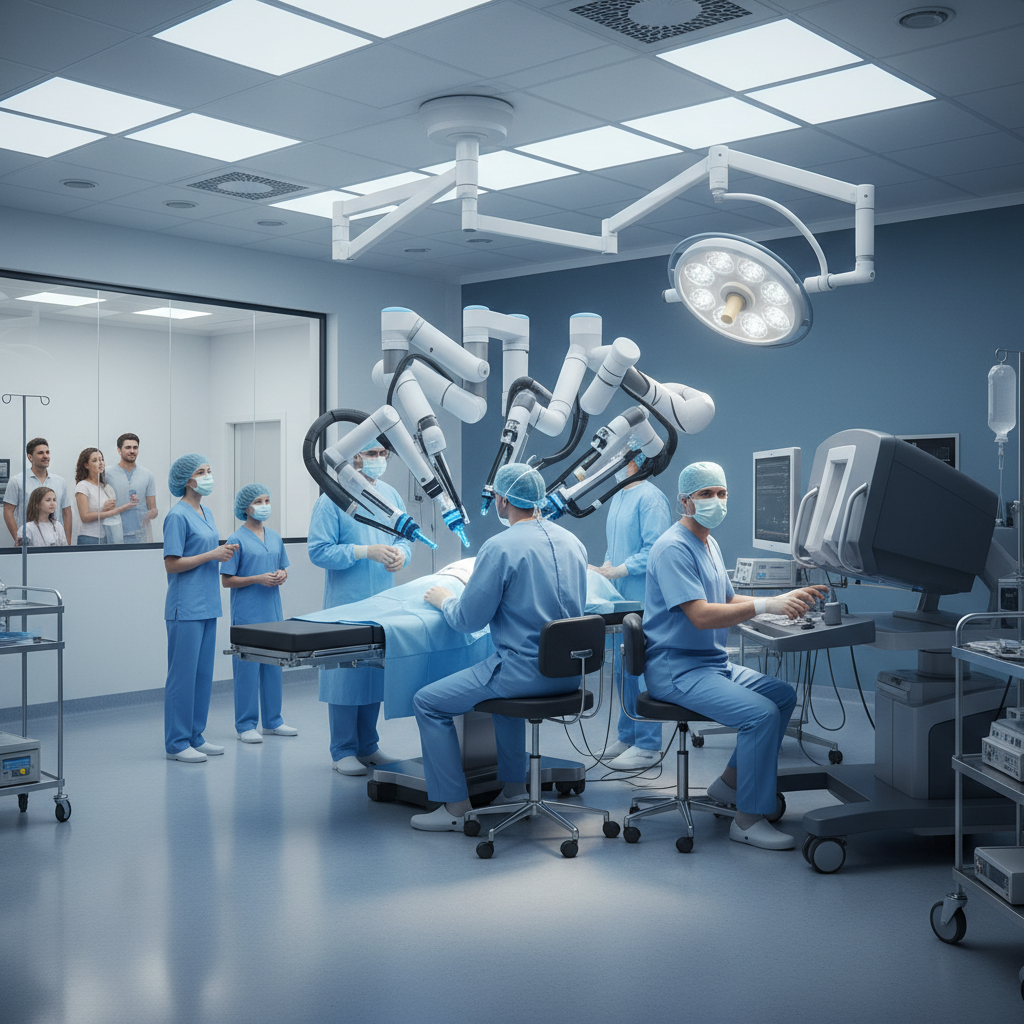
The question of what is robotic surgery has been asked more frequently in recent years as “closed surgery” options have increased and technology has become more visible. The first misconception that comes to mind when it comes to robotic surgery is the idea that “the robot performs surgery on its own”. However, robotic surgery is one of the methods of minimally invasive surgery (surgery with small incisions) supported by high-resolution images and precise instrument movements, which the surgeon manages from a console. In other words, it is always the surgeon who decides, plans and executes all the steps; the robotic surgery system helps the surgeon to transfer his/her manual skill to the field in a more controlled and meticulous manner.
In this article, we will discuss in detail the most curious topics such as how robotic surgery is performed, what are the advantages of robotic surgery, is robotic surgery safe, what is the difference between robotic surgery and laparoscopy. In addition, we will explain in which areas robotic surgery is used, for whom robotic surgery is suitable, the robotic surgery recovery process and the factors affecting the price for robotic surgery prices 2026 and what to look for in the search for Istanbul robotic surgery with practical suggestions.
What is Robotic Surgery? Can a Robot Operate on Its Own?
The clearest answer to the question of what robotic surgery is is this: Robotic surgery is an advanced closed surgery method where the surgeon controls the surgery through a console and robotic arms and special surgical instruments are used in the operating field. The “robot” here is not an autonomous device that makes its own decisions; it is a technological platform that transmits the surgeon’s movements exactly and with high precision.
The robotic surgery system usually consists of three main parts:
- Surgeon console: The surgeon sits here, sees the surgical field magnified with 3D imaging and manages the instruments with hand gestures.
- Patient trolley (robotic arms): Positioned next to the patient, with arms carrying the camera and surgical instruments.
- Imaging/energy systems: 3D high-resolution imagery supports operation with light source and in some cases advanced energy devices.
This approach is a good example of “what is minimally invasive surgery?”: The aim is to reach the target organ through small incisions instead of large incisions with less trauma to the tissues and to increase the precision of the surgeon. Especially in narrow anatomical areas and procedures requiring suturing/reconstruction, robotic surgery can provide significant technical convenience to the surgeon.

How is Robotic Surgery Performed? Preoperative, Intraoperative and First 24 Hours
Although the answer to the question of how robotic surgery is performed varies according to the type of surgery to be performed (e.g. urology, gynecology, general surgery), the basic flow is similar. The process is usually considered in three stages:
Preoperative preparation
The general health status of the patient is evaluated; blood tests, imaging methods and anesthesia examination are planned. Medications (especially blood thinners), comorbidities (cardiovascular, diabetes, lung diseases) and previous surgery history are important in terms of suitability for robotic surgery. This section also forms the basis of the question “who is suitable for robotic surgery”.
What happens during surgery?
- Several small incisions are made in the abdomen or the affected area and so-called “ports” are inserted.
- Cameras and robotic instruments are brought in through these ports.
- The surgeon switches to the console and performs the operation by directing the robotic arms with 3D images.
- At the end of the procedure, the instruments are removed, the incisions are closed and the patient is taken to recovery.
First 24 hours after surgery
The first 24 hours of recovery after robotic surgery are critical for pain control, early mobilization (standing/walking), transition to nutrition and early follow-up of possible complications. “Pain after robotic surgery” may vary from person to person; planned pain relief protocols are applied for pain management. In some surgeries, discharge may be considered on the same day, in others within 1-3 days; the answer to the question “when to be discharged after robotic surgery” is determined according to the scope of the surgery, the patient’s comorbidities and the clinical course.
What are the Advantages of Robotic Surgery (Is it the Same for Every Patient?)
When it comes to the advantages of robotic surgery, generalizations such as “better” are often heard; however, the correct approach is this: Robotic surgery can provide significant benefits in the right patient and for the right indication. The advantages vary depending on the type of surgery and the experience of the team.
1) Clearer vision with 3D and magnified image
In robotic surgery, 3D high-resolution imaging helps the surgeon to see the anatomy in more detail. This can be especially valuable in surgeries where preservation of vascular-nerve structures is important.
2) Precise mobility and “wristed” instruments
Robotic instruments can move in multiple directions, mimicking the movements of the human wrist. This can be advantageous in steps such as suturing, tissue separation and reconstruction in tight spaces.
3) Working with smaller incisions (minimally invasive approach)
Robotic surgery is a closed surgical approach in most cases. Small incisions may be associated with potential benefits in some patients, such as less wound site pain, faster mobilization and earlier return to daily life. However, this may not be the same for every surgery and every patient.
4) Surgeon ergonomics and meticulous operation
The more ergonomic positioning of the surgeon at the console can support focus and fine motor control during long and technical operations. This can be an important plus, especially in complex cases.
In addition to the advantages of robotic surgery, the risks and limitations of robotic surgery should also be discussed honestly: Robotic surgery is not recommended for every patient; sometimes laparoscopy or open surgery may be more appropriate. The patient’s condition, the goal of the surgery and the experience of the team are decisive here.

Is Robot Surgery Safe? Risks, Complications and Factors Improving Safety
“Is robotic surgery safe?” is one of the most justified questions of patients at the decision-making stage. In general, robotic surgery can be a safe method when applied with appropriate patient selection and experienced team. However, like any surgical procedure, it involves risks.
General surgical risks (independent of method)
- Bleeding
- Infection
- Risks related to anesthesia
- Clot formation (thrombosis), lung problems
- Organ injuries or unexpected complications, depending on the procedure
Special considerations for robotic surgery
- Team experience and learning curve: Safe and efficient implementation of robotic surgery requires training and experience.
- Duration of operation and positioning: In some robotic surgeries, the patient may stay in certain positions for a longer time; therefore, careful planning is made in terms of rare risks such as pressure sores and nerve compression.
- Technology-related possibilities: Very rarely, technical problems may occur; therefore, centers should have a plan to transition to laparoscopy or open surgery when necessary.
Practical factors that improve safety
- Infrastructure of the hospital where the surgery will be performed (intensive care, blood bank, 24/7 emergency)
- Multidisciplinary approach (anesthesia, related branches, cardiology/chest diseases support when necessary)
- Clear postoperative follow-up plan
Questions the patient should ask (mini checklist):
- Is robotic surgery or laparoscopy more suitable for this operation? Why?
- What are the risks of robotic surgery in my case?
- How many days will I stay in the hospital, what are the discharge criteria?
- Which postoperative symptoms should I contact the emergency room?
What is the Difference Between Robotic Surgery and Laparoscopy? Which one is more suitable?
The difference between robotic surgery and laparoscopy is one of the most common issues that patients compare. Although both are often considered “closed surgery”, there are some technical differences. The table below provides a general framework:
| Criteria | Laparoscopy | Robotic surgery |
|---|---|---|
| Image | Usually 2D | Usually 3D, magnified image |
| Instrument movement | More limited | More versatile (“wristed” movement) |
| Stitching/reconstruction | Very dependent on experience | Some procedures may provide technical ease |
| Ergonomics | May be more tiring for the surgeon | Ergonomic work at the console |
| Cost/accessibility | More widespread | May be more costly, number of centers may be limited |
So how to answer the question of robotic surgery or laparoscopy? General principle: If the goal of the surgery requires tissue preservation, precise dissection in a narrow space or complex suturing, robotic surgery may be advantageous. For some more standard and shorter procedures, laparoscopy may offer similar clinical results. The best decision is based on the patient’s anatomy, comorbidities, history of previous surgery and the surgeon’s recommendation.
In Which Areas Is Robotic Surgery Used? (Examples According to Branches)
The answer to the question in which areas robotic surgery is used is quite broad. Today, robotic surgery can be applied in many branches, especially in urology, gynecology and general surgery. Examples
Urology
- Robotic prostate surgery (e.g. radical prostatectomy)
- Robotic kidney surgery (selected cases) In this field, 3D imaging and the possibility of precise suturing/dissection may become important for function-sparing surgery goals.
Gynecology
- Robotic hysterectomy (removal of the uterus)
- Robotic fibroid surgery (in appropriate cases)
- Complex pelvic surgeries such as endometriosis (according to case selection)
General surgery
- Robotic colon surgery (in selected cases)
- Obesity surgery and reconstructive procedures (according to the experience of the center)
For those who are curious about the robotic approach in obesity surgery, you can review the following content: What is Robotic RNY (Roux-en-Y) Gastric Bypass? Advantages, Who is it Suitable for and Recovery Process . This article helps you to see more concretely how robotic surgery is positioned in a specific type of surgery.
Who is Robotic Surgery Suitable for? Recovery Process and Factors Affecting the 2026 Price
The question of who is suitable for robotic surgery cannot be answered in a single sentence, because suitability is evaluated together with the type of surgery and the characteristics of the patient. In general, robotic surgery can be a good option when closed surgery is appropriate, technical precision is important and the team is experienced. However, some patients (e.g. severe lung/heart disease, suspicion of extensive intra-abdominal adhesions, highly complex anatomical conditions) may require more careful evaluation. The final decision is made by the physician after examination and tests.
Robotic surgery recovery: a practical timeline
Although recovery varies according to the extent of the surgery, the following topics are guiding for many patients:
- 0-24 hours: Pain control, early mobilization, fluid/food transition plan
- Week 1: Wound care, short walks, return to light daily activities
- 2-4 weeks: “Return to work after robotic surgery” may come up in this interval in most surgeries (depending on the physical burden of work)
- 6 weeks and later: Physician approval is important for more intense exercise and return to full activity
Contact your healthcare provider without delay in the following cases: fever, increasing abdominal pain, marked redness/ discharge at the wound site, shortness of breath, swelling and pain in the leg, persistent nausea and vomiting.
Robotic surgery prices 2026: what determines the price?
searches for “robotic surgery prices” and especially “robotic surgery prices 2026” may lead one to expect a clear figure, but the ethical and correct approach is to transparently explain that the price varies depending on the person and the procedure. The main factors affecting the price:
- Type of surgery and level of difficulty
- Length of hospitalization and room/service selection
- Consumables used and technology requirement
- Anesthesia and operating room team
- Additional examinations (imaging, laboratory)
- Possible need for intensive care
- SSI/private insurance coverage (may vary according to policies and agreements)
- Postoperative follow-up plan and number of controls
For this reason, the most reliable price information becomes clear with personalized planning after the examination. When evaluating Istanbul robotic surgery options, it is important to question not only the price but also the experience of the team, hospital infrastructure and postoperative follow-up plan for a safe process.
For more information about the robotic approach, recovery and eligibility criteria for bariatric surgery, you can check our related article again: What is Robotic RNY (Roux-en-Y) Gastric Bypass? Advantages, Who is it Suitable for and Recovery Process .