

Despite diet and regular exercise, stubborn fat deposits in some areas can be permanent. People who want to make their body contours more balanced, especially in areas such as abdomen-waist circumference, hips, inner legs, arms or double chin, investigate the “liposuction” (fat removal) method. Although liposuction is one of the most preferred aesthetic operations today, it is not a weight loss method, but a regional slimming and shaping application evaluated within the scope of “body contour aesthetics”. Therefore, choosing the right candidate, determining the appropriate technique and managing the post-liposuction care process well are important for both safety and naturalness of the results.
Local access is also an important criterion for those considering body contouring options in Istanbul. Private Family Hospital, serving in Bahçelievler, Istanbul, adopts a personalized planning approach with its expert aesthetic and plastic surgery team. In this article, we will comprehensively cover the most curious topics such as “what is liposuction”, “for which areas liposuction is suitable”, “liposuction techniques (classical, Vaser, laser)”, “when liposuction results are evident” and “post-liposuction care”. For a more general framework, you can also take a look at Liposuction Information Guide: Process, Risks and Who is it Suitable for? .
What is Liposuction (Body Contouring Aesthetics, Not Weight Loss)
Liposuction is the process of removing excess fat tissues accumulated in certain parts of the body with special methods. The main goal here is to shape body contours, improve the posture of clothes and reduce the disproportionate appearance created by regional adiposity, rather than creating major changes in the scale. Therefore, the most accurate answer to the question “does liposuction make you lose weight?” is: **Liposuction is not a weight loss method; it is a body shaping application
At this point, expectation management is very important. Liposuction can emphasize the contour in areas such as abdomen, waist, hips; however, for a permanent and balanced appearance, the person’s lifestyle (nutrition, movement, water consumption) is among the factors affecting the results. In addition, each individual’s skin elasticity, distribution of fat tissue and targeted appearance are different. For this reason, it is not correct to give a clear guarantee to questions such as “how many sizes will I get thinner?”; results may vary from person to person.
The following topics are generally evaluated in liposuction planning:
- Intensity and distribution of regional adiposity
- Skin quality and elasticity (in terms of skin adaptation to the new contour)
- General health status of the person
- realistic goals (natural and balanced contouring)
For a more detailed “for whom it is/is not suitable” assessment, the link Liposuction Information Guide: Process, Risks and For Whom it is Suitable will be a comprehensive resource.

Which Areas is Liposuction Applied to? (Regional Fat Focused Approach)
the question “For which areas is liposuction performed?” is one of the most frequently asked questions by people researching the procedure. In line with the source approach, liposuction can be evaluated in the following areas as a method that helps to reduce regional adiposity:
- Abdominal and waist circumference: It is one of the most frequently applied areas. Fat tissue accumulated in the abdomen and waist line can significantly affect the body contour. When the contour target is planned correctly, the waist-to-hip ratio may appear more balanced.
- Buttocks and hips: Fat accumulation in the hip area may be resistant to exercise in some people. A more balanced appearance of the hip-hip transition can also positively affect clothing fit.
- Inside the leg and around the knee: Complaints such as friction inside the leg and contour irregularity around the knee increase liposuction research in these areas. The aim here is to achieve a smoother contour rather than “thinning”.
- Arm and jowl area: Fat tissue accumulated on the back of the arm or jowl can be disturbing, especially in photographs and profile views. When planning in these areas, skin quality and healing process are carefully evaluated.
- Chest area in men (gynecomastia): In some cases, the increase in volume in the chest area in men may be due to adipose tissue. Liposuction in this area may be part of the planning in appropriate patients.
The method to be applied for each region may vary according to the structure of the fat tissue and the targeted shaping level. For this reason, it is important for people who are researching Istanbul liposuction to receive a “region-specific” evaluation during the examination.
Liposuction Techniques: Classical, Vaser (Ultrasonic) and Laser Assisted Methods
When it comes to liposuction techniques, the most common options are classical liposuction, Vaser (ultrasonic) liposuction and laser-assisted liposuction. Which technique is more suitable is determined by the physician’s evaluation according to the region, the characteristics of the fat tissue and the person’s goals.
Classic Liposuction
Classical liposuction is one of the basic methods that has been applied for many years and can be used in different regions. The aim is to remove excess adipose tissue in the designated areas in a controlled manner and to improve the contour. The classical method can be an effective body shaping approach with the right planning in the appropriate patient.
Vaser (Ultrasonic) Liposuction
Vaser liposuction is among the modern techniques that affect fat tissue with ultrasonic energy support. people who research the question “What is Vaser liposuction?” often wonder whether a more targeted contour can be achieved. What is important here is that the technique alone does not create a “miracle”; it should be evaluated together with surgical planning and the anatomical features of the person.
Laser Assisted Liposuction
Laser liposuction or “laser assisted liposuction”, as the name suggests, is one of the methods in which laser energy is used as a supportive method. How and for what purpose the laser will be used may vary according to the area to be applied and clinical planning. the expectation frequently seen in “What is laser liposuction?” searches is that the skin appearance is more lifted; however, since the results may vary according to the person, evaluation should be made with realistic goals.
short Comparison of #### Techniques (Overview) The following table provides a general framework for the question “vaser or laser or classic?”. Examination is essential for a clear decision:
| Headgear | Classic Liposuction | Vaser (Ultrasonic) Liposuction | Laser Assisted Liposuction |
|---|---|---|---|
| Purpose | Removal of regional fat tissue | Effect on fat tissue with ultrasonic support + shaping | Effect on fat tissue with laser support + shaping |
| Reason for preference | Common, basic approach | According to technical preference and planning | According to technical preference and planning |
| Factors affecting results | Skin quality, region, care | Skin quality, region, care | Skin quality, region, care |
If you want to read more about the process, risks and suitability assessment of these techniques: the content of Liposuction Information Guide: Process, Risks and Who is Suitable for It? is a good complement.
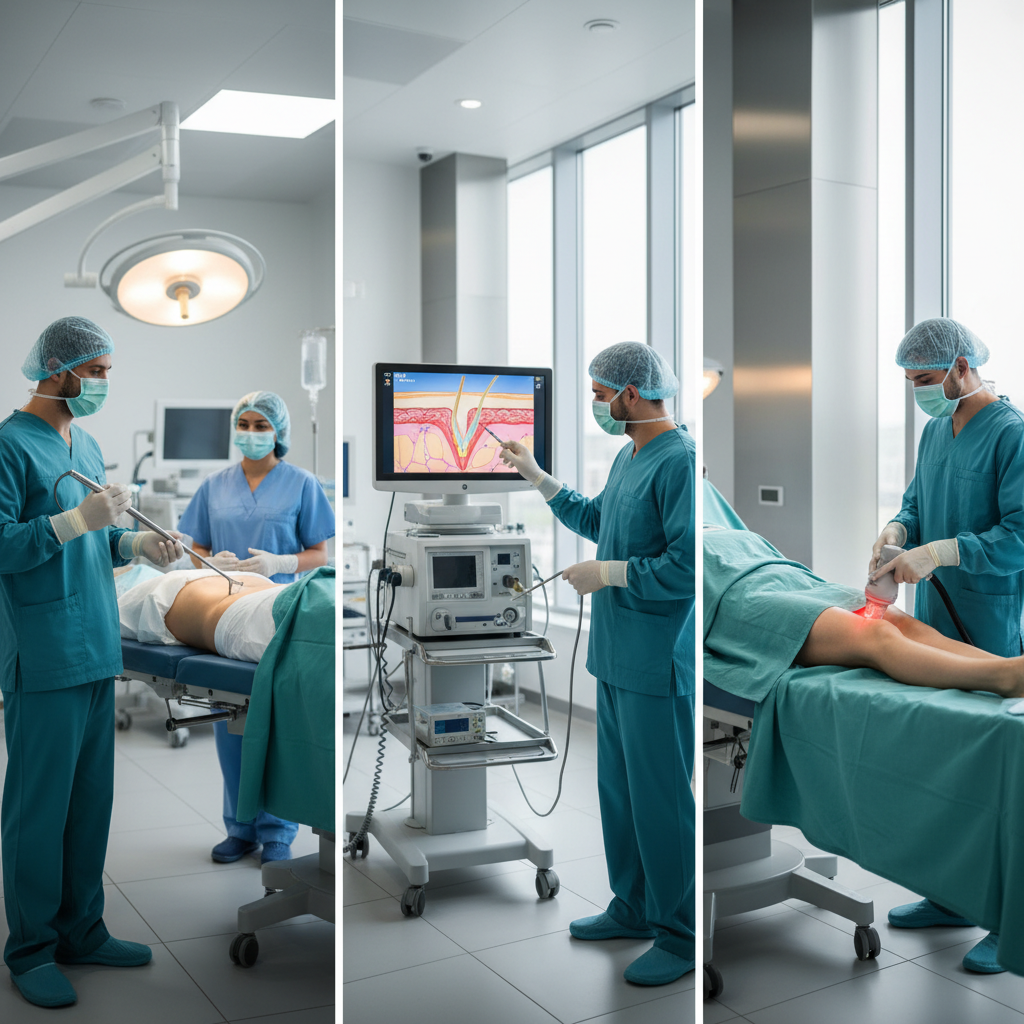
Liposuction Results: When Will It Become Clear, Is It Permanent, What to Expect?
the answer to the question “When will the results of liposuction be evident?” is a time-consuming process due to the nature of the healing process. Edema and bruising may be seen in the early postoperative period; this is generally considered normal as stated in the source approach. It can therefore be misleading to look in the mirror in the early days and judge the final result.
A general timeline (depending on the person) can be thought of as follows:
- First days: Edema, tenderness and bruises may be seen. Rest, fluid intake and compliance with the doctor’s recommendations are important.
- First weeks: It is expected that the swelling will gradually begin to decrease. It is normal to increase the searches for “edema after liposuction” and “bruises after liposuction” during this period; because the image changes day by day as the body heals.
- The following weeks/months: The contour begins to fit more clearly. Patience and regular follow-up are important for the final look.
Is Liposuction Permanent? Does the Fat Come Back?
The fat tissue removed by liposuction is reduced in the relevant area; however, in case of weight gain, there may be an increase in volume in other parts of the body or in the fat cells remaining in the same area. Therefore, the practical answer to the question “Is liposuction permanent?” is this: The preservation of the result is closely related to lifestyle. A healthy diet and regular exercise support the body shaping result.
The Difference Between Liposuction and Tummy Tuck
One of the frequently confused topics is “the difference between liposuction and tummy tuck”. Liposuction basically focuses on reducing fat tissue. A tummy tuck is a different surgical approach and is usually considered when there are other needs such as excess skin. The appropriate procedure should be determined according to the examination findings.
Post Liposuction Care and Recovery Process: Corset, Walking, Nutrition
Post-liposuction care is one of the most critical stages for a healthier and more predictable outcome. As mentioned in the resource approach, mild postoperative edema and bruising may be normal; however, compliance with the following recommendations is important for a good recovery:
1) Corset Use (Corset after liposuction)
Regular use of the corset recommended by the doctor is a supportive application during the healing period. the answer to the question “How many days is the corset used after liposuction?” varies according to the person and the area applied; therefore, the duration and method of use must be determined according to the physician’s plan. The correct size and regular use of the corset can affect comfort and management of the process.
2) Water Consumption and Healthy Nutrition (Nutrition after liposuction)
Drinking plenty of water and eating a balanced diet supports general well-being during the recovery period. Paying attention to water consumption and salt balance can be especially helpful in managing edema. Protein, fiber and a regular meal plan can support energy and recovery.
3) Movement Plan Avoid Heavy Exercise + Light Walking
As emphasized in the source text, it is recommended to avoid heavy exercises for a while and regular light walks. it is not correct to give a clear time in the question “When can I do sports after liposuction?” because the healing speed of the person and the area applied are important. However, for most people, controlled walking can be planned early on as a circulation-supportive habit (with doctor’s approval).
4) Tracking and Security
During the recovery process, it is important not to interrupt the controls and to stay in contact with the healthcare team in case of an unexpected situation. As with any surgical procedure, there may be individualized risks and points to be considered. Therefore, rely on your own doctor’s guidance when following general recommendations.
Hospital conditions and follow-up organization can also affect comfort for people planning liposuction in Bahçelievler, Istanbul. Private Family Hospital aims to provide a safe and comfortable experience in the liposuction process with its modern operating room conditions and experienced expert staff.
Note: This article is for informational purposes. Assessment and planning is individualized according to the examination findings.