

Neck pain, pain radiating to the shoulder-arm line, numbness or tingling in the arms… These complaints are increasingly common today, especially due to desk work, looking at the phone for a long time and a sedentary lifestyle. One of the important causes of these complaints is neck hernia. This condition, called cervical disc herniation in medical language, occurs when the disc structure between the cervical vertebrae is worn out or displaced and presses on the nerves. Depending on the location and severity of the pressure, the pain may remain only in the neck or extend to the arm and hand; in some patients, muscle weakness and limitation of movement may be added.
In this guide, we will address questions such as “What is a cervical hernia?”, “What are the symptoms of a cervical hernia?”, “How is a cervical hernia diagnosed (is MRI/EMG required)?”, “How is the treatment of a cervical hernia planned, is non-surgical treatment possible, when is cervical hernia surgery considered?” in an understandable language. Private Aile Hospital offers evaluation and treatment options with its expert staff.
What is a Herniated Cervical Disc (Cervical Disc Herniation)?
The cervical vertebrae (cervical spine) support the head and allow the neck to move. The discs between the vertebrae act as a kind of “cushion”, contributing to shock absorption and reducing friction during movement. Over time or under certain stressful conditions, this disc structure can wear out or move. If the disc protrudes beyond its natural boundaries and presses on the surrounding nerve tissues, a neck hernia (cervical disc herniation) may occur.
Herniated discs in the neck are often not due to a single cause; often several risk factors play a role together. Common conditions include:
- Desk work and poor posture: Low position of the monitor, shoulders falling forward, staying in a fixed position for a long time.
- Sedentary life: Weakening of the neck and back muscles can negatively affect the load distribution of the spine.
- Repetitive strain: Driving for long periods of time, working by constantly turning in the same direction.
- Sudden strain or trauma: Falls, bumps, sudden neck movements.
- Age-related changes: Discs may naturally wear out over time.
Note: Neck pain does not always mean a hernia. Muscle spasm, poor posture or other spinal problems can also cause similar symptoms. Therefore, examination is important for a correct diagnosis.
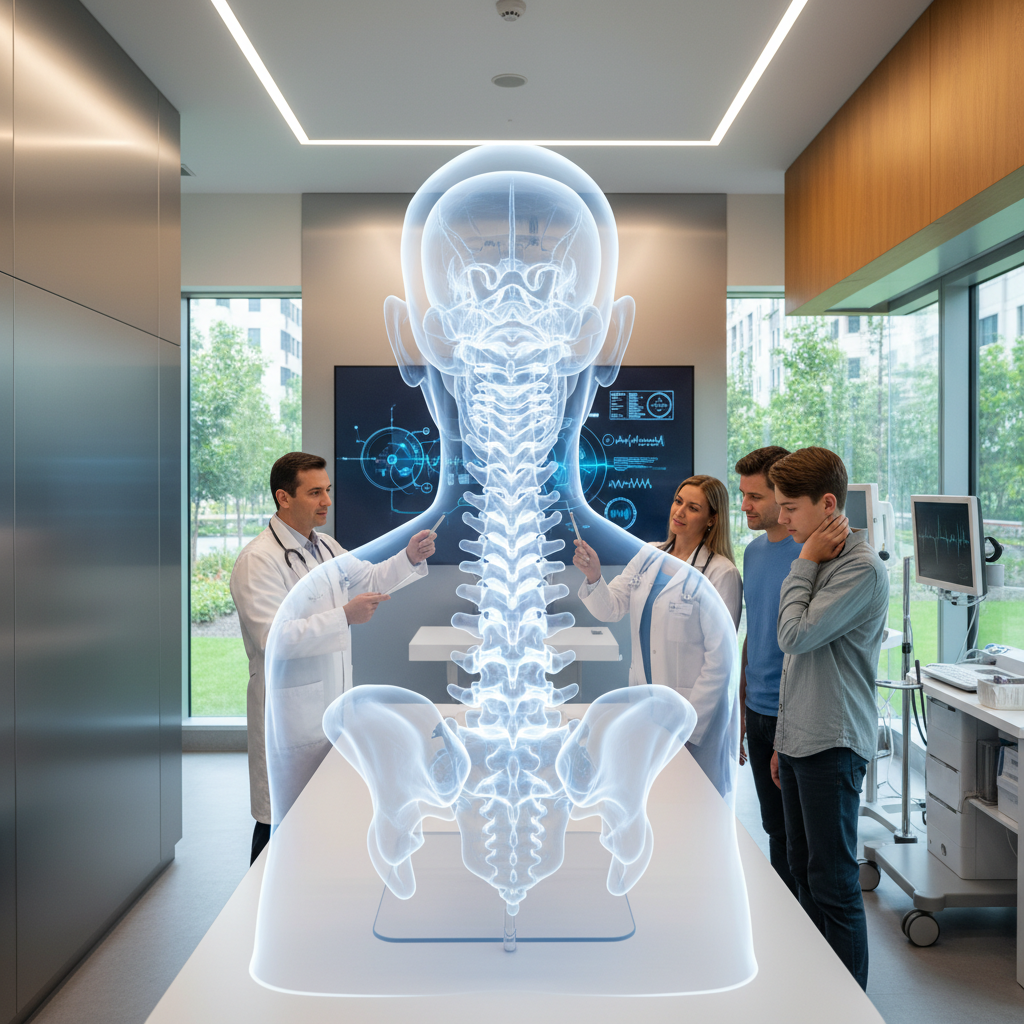
What are the Symptoms of Cervical Hernia? Most Common Complaints and Alarm Signs
**Symptoms of a herniated disc in the neck can vary depending on the level of pressure on the nerve. While some people only have pain and stiffness in the neck, in others the symptoms may extend from the shoulder to the arm or even the hand.
Common neck hernia symptoms
- Neck, shoulder and arm pain: Pain is sometimes described as burning or stinging.
- Numbness or tingling in the arms: May increase especially when staying in the same position for a long time.
- Muscle weakness: Complaints such as decreased grip strength in the hand and dropping objects may be observed.
- Headache: Some patients may be accompanied by headache originating from the neck.
- Limitation of movement: Difficulty turning the neck, morning stiffness, increased pain with certain movements.
Conditions that can aggravate symptoms (frequently described by patients)
- Staying on the computer for long periods of time
- Don’t look down at the phone
- Waking up with a stiff neck
- In some people, pain intensifies with coughing/sneezing
When to consult a doctor without delay (alarm symptoms)
Immediate medical evaluation is recommended in the following cases
- Progressive loss of strength (marked increase in arm/hand weakness)
- severe and persistent pain that clearly affects daily life
- Increasing numbness/tingling and difficulty with fine work
- **Addition of common neurological complaints such as balance disorder, difficulty in walking, marked decrease in manual dexterity
- (Although rare) Findings that may require urgent evaluation such as change in urinary/bowel control
These symptoms may not always indicate a serious condition, but require examination for diagnosis of a cervical hernia and appropriate treatment plan.

How is Neck Hernia Diagnosed? When do I need an examination, MRI and EMG?
the answer to the question “**How to recognize a herniated disc in the neck?” is based not only on an imaging result, but also on a history of complaints and a medical examination. The diagnostic process usually involves several steps and the aim is to assess both the presence of a hernia and the degree of nerve involvement.
1) Clinical evaluation and physical examination
The physician asks when the complaints started, where the pain radiates, whether there is numbness/tingling and how it affects daily life. Subsequent examination
- Muscle strength is assessed (including arm and hand muscles),
- Sensory examination is performed (areas of numbness),
- Reflexes can be controlled,
- Neck range of motion and positions that increase pain are observed.
This stage is very valuable in distinguishing “neck pain or nerve pressure”.
2) When is MRI (Magnetic Resonance) ordered?
**An MRI examination of a herniated disc in the neck is often preferred because it shows the disc and nerve tissue in detail. MRI is not required for every neck pain; however, the physician may request an MRI in the following cases:
- If complaints suggestive of nerve compression such as arm pain/numbness are evident,
- If neurological findings are detected on examination (e.g. loss of strength),
- If symptoms persist or increase despite treatment.
3) When is an EMG ordered?
An EMG (electromyography) can be helpful in assessing nerve conduction and muscle involvement. Not routinely performed on every patient; usually:
- Clarify the source of numbness and loss of strength,
- To assess the level of nerve involvement,
- Differentiate other nerve compressions that may cause similar symptoms can be planned by the physician for the purpose.
Practical information: the statement “MRI shows a hernia” alone does not determine the treatment decision. What is important is whether the MRI finding is consistent with the complaint and examination.
Neck Hernia Treatment: Non-Surgical Methods and Surgical Options
**Treatment of cervical hernia is planned according to the patient’s complaints and the level of the hernia. The goal is to reduce pain, control the effects of pressure on the nerve, increase mobility and provide a safe return to daily life. In many patients, the first-line approach is conservative treatment (nonoperative treatment).
Non-surgical (conservative) treatment options
Medication
- Painkillers and muscle relaxants can help reduce the pain-spasm cycle.
Medicines must be used on the advice of a physician and for the appropriate duration/dose.
Physical therapy and exercise
- Physical therapy aims to strengthen the muscles around the neck and improve movement control.
- Posture training can be supported with a personalized exercise plan.
- The aim is not only to suppress pain, but to support neck mechanics in a way that reduces recurrences.
Injection therapies (in appropriate patients)
- In some patients, injection therapies may be considered for pain control and reduction of inflammation around the nerve.
- These applications are not suitable for all patients; the decision is made by the physician based on examination and imaging findings. When necessary, it is planned with imaging accompaniment and under appropriate safety conditions.
###When is cervical herniated disc surgery (surgical treatment) considered? *surgical options may be considered in advanced cases, especially in patients with progressive loss of strength or in cases where complaints cannot be controlled despite conservative treatment. The surgical decision is individualized according to the duration of symptoms, the presence of neurological findings, the impact on quality of life and the response to conservative treatment.
Some branches where non-surgical and surgical options are evaluated together are as follows: Orthopedics, Brain and Neurosurgery, Physical Therapy and Rehabilitation.
The surgical decision is different in each patient. The best approach is to make a “risk-benefit” assessment together with examinations and tests.
If you are curious about a related technological approach, you can also take a look at this overview of innovations in the field of surgery:
What are the Advantages of Robotic Surgery? Patient and Surgeon Perspective
Recommendations for Neck Health: Prevention and Reducing Repetition in Daily Life
Daily habits can make a big difference when dealing with herniated disc symptoms (and to reduce recurrences):
- Create an ergonomic working environment: Monitor at eye level, chair with back support, elbows supported. Take short breaks instead of staying still for a long time.
- Pay attention to your neck angle when using the phone and computer: Tilting the head forward while looking at the phone can increase the neck load. Raise the screen if possible.
- Exercise regularly: Exercises to strengthen the muscles around the neck-scapula with the recommendation of a physician or physiotherapist can provide sustainable benefits.
- Use an appropriate pillow: A pillow that is too high or too low can disrupt the neck position. It is aimed to keep the neck in a neutral position during sleep.
- Drink enough fluids for general health: Making a habit of drinking water regularly throughout the day is beneficial for general health.
Cervical hernia treatment in Istanbul & spine evaluation in Bahçelievler
the most important step for patients seeking “Istanbul cervical hernia treatment” or “Bahçelievler spine” is the correct evaluation of the complaints and the creation of a personalized treatment plan. Private Aile Hospital aims to offer a personalized approach in line with the examination and examinations. You can contact our hospital for appointment and detailed information.
Frequently Asked Questions (FAQ)
What is a cervical herniated disc?
It is a condition in which the disc structure between the cervical vertebrae is worn out or displaced and presses on the nerves. The medical name is cervical disc herniation.
What are the symptoms of a cervical hernia?
The most common symptoms are neck-shoulder-arm pain, arm numbness/tingling, muscle weakness, headache and limitation of movement.
Is a cervical disc herniation the same as a herniated disc in the neck?
Yes. “Cervical disc herniation” is the medical name for a herniated disc in the neck.
Is an MRI necessary for a herniated disc in the neck?
MRI is not required for every neck pain. However, if there are findings suggestive of nerve compression, if neurological findings are detected on examination or if the complaints are prolonged and increasing, the physician may request an MRI.
Why is an EMG ordered for a herniated disc in the neck?
EMG may be ordered in some patients to assess the degree of nerve involvement or to differentiate between other nerve problems causing similar symptoms.
Does a cervical hernia go away without surgery?
The first step in many patients is non-surgical (conservative) treatment methods: medication, physical therapy and, in appropriate patients, injection therapies can be planned. The treatment is determined according to the patient’s complaints and the level of the hernia.
###When is neck hernia surgery necessary? *surgical options may be considered in advanced cases, especially in patients with progressive loss of strength or in cases where complaints cannot be controlled despite conservative treatment. The decision is made individually according to the examination and tests.
Medical warning: This content is for informational purposes. A medical examination is necessary for diagnosis and treatment plan.
Internal Connection Recommendations
The following links are recommended to strengthen the topic integrity if your site has them:
- Physical Therapy and Rehabilitation (service page)
- Neurosurgery (service page)
- Orthopedics and Traumatology (service page)
- Herniated disc / sciatica / posture disorder / ergonomics contents (related blog posts)
Existing internal connection: